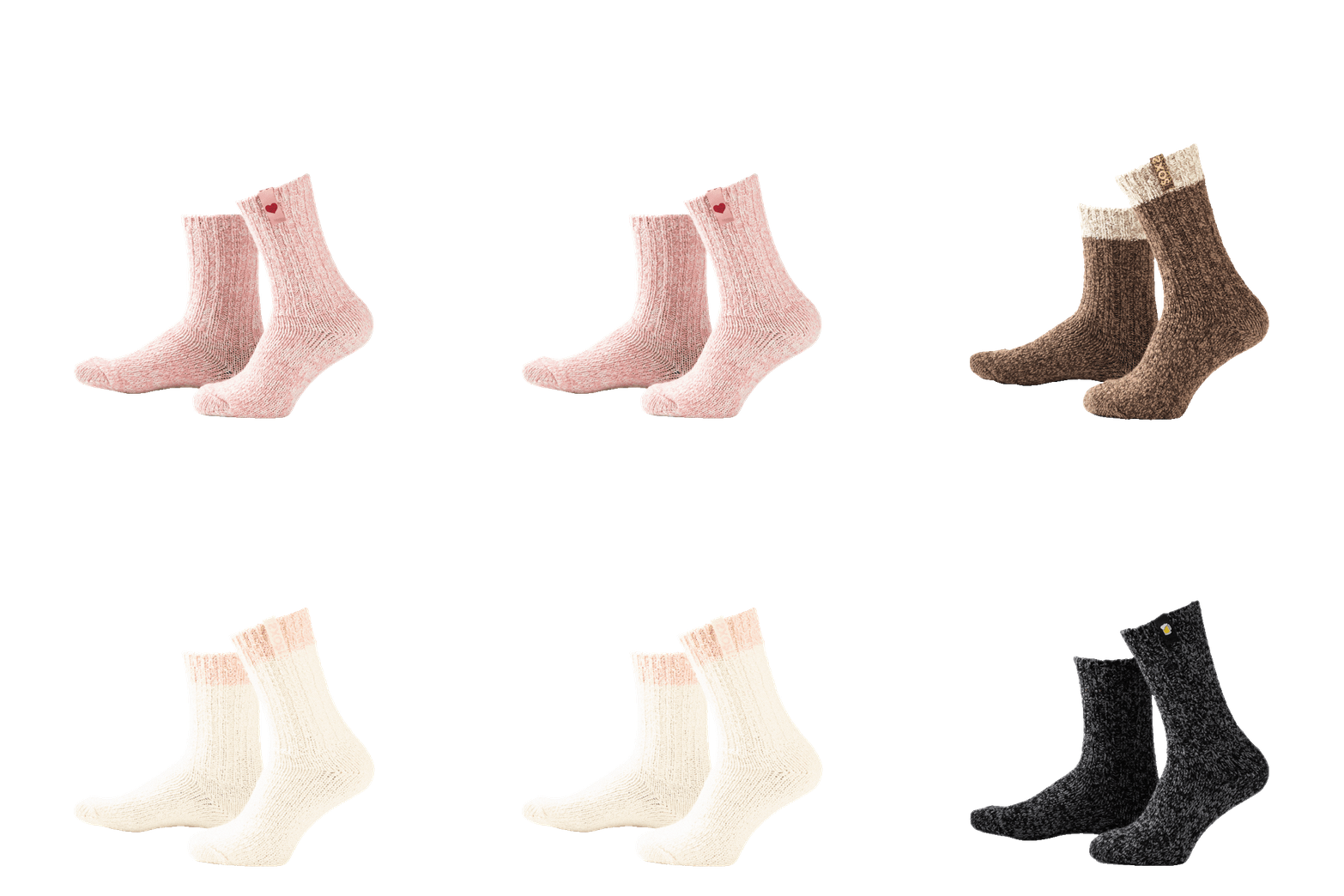
Soft warm premium wool socks
Gift ready, stylishly packaged
Orders placed before 1:00 PM will be shipped today (on weekdays) PLEASE NOTE: The delivery time of Pimp My Soxs is 5 working days!

Wool socks shrink in the wash because the natural fibres lock together when exposed to heat, agitation, and moisture at the same time. This process, called felting, is irreversible once it happens, which is why caring for wool correctly matters from the very first wash. Below, we answer the most common questions about why wool socks shrink and exactly how to prevent it.
Wool fibres shrink because of their unique microscopic structure. Each fibre is covered in tiny overlapping scales, similar to roof tiles. When heat, moisture, and movement combine, those scales open up, interlock with neighbouring fibres, and tighten permanently. This is called felting, and it is the root cause of why wool socks shrink in the wash.
The process is essentially irreversible because the fibres physically bind together rather than simply tangling. Regular fabrics like cotton may stretch or distort, but they do not felt. Wool is different because its protein-based fibres react chemically to changes in temperature and pH, making them especially sensitive to harsh washing conditions.
At SOXS, we craft our socks from ethically obtained wool sourced from New Zealand sheep. The quality of the raw fibre matters, because fine, well-processed wool is more consistent in structure and responds more predictably to gentle care. That said, even the finest wool will felt if it is washed incorrectly.
Yes, the wash cycle makes a significant difference when washing wool socks. Agitation is one of the three triggers of felting alongside heat and moisture, so a vigorous spin cycle or a standard cotton wash setting can cause serious shrinkage. A gentle or wool-specific cycle dramatically reduces that risk by limiting mechanical movement and using cooler water temperatures.
Here is what to look for when choosing a cycle for wool sock care:
Hand washing in cool water with minimal rubbing is the safest option of all. Gently squeeze the socks through the water rather than wringing or twisting them, and let them soak briefly before rinsing with water at the same temperature to avoid sudden thermal shock.
Yes, wool socks can absolutely shrink in the dryer, and for many people the dryer causes more damage than the wash itself. The combination of high heat and tumbling motion inside a dryer creates near-perfect felting conditions. Even a short tumble on a warm setting can cause noticeable shrinkage and a stiff, matted texture that is difficult to reverse.
The safest approach is to skip the dryer entirely. After washing, gently press the excess water out of your socks without wringing, then reshape them by hand and lay them flat on a clean towel to dry naturally at room temperature. Avoid hanging them, as the weight of the water can stretch the fibres while they are wet and vulnerable.
Keep drying wool socks away from direct heat sources such as radiators, sunny windowsills, or heated drying racks. Concentrated heat, even without tumbling, is enough to trigger shrinkage and can also cause the fibres to become brittle over time.
To wash wool socks without shrinking them, use cool water, a gentle cycle or hand wash method, a wool-safe detergent, and always air dry flat. Avoiding heat and agitation at every stage of the process is the key to keeping your socks in their original shape and size wash after wash.
Follow these steps for washing wool socks safely:
With consistent care, a quality pair of wool socks can last for years. We designed our SOXS Originals to be durable companions for everyday life, but they will reward you with a longer lifespan when you treat them gently at wash time.
The key difference between superwash wool and regular wool is that superwash wool has been treated to remove or flatten the microscopic scales on each fibre, making it far more resistant to felting. Regular wool retains its natural scale structure, which gives it superior warmth and breathability but also makes it more vulnerable to shrinkage if washed incorrectly.
Superwash wool undergoes a chemical or mechanical treatment that strips or coats the fibre scales. The result is wool that can often be machine washed on a regular cycle without felting. It is a practical choice for everyday use, but the treatment process does alter the natural properties of the fibre slightly, and some treatments involve additional chemical inputs that are worth being aware of if sustainability matters to you.
Untreated wool retains all of its natural characteristics: excellent temperature regulation, moisture management, and breathability. It is the more natural option, but it requires more careful handling during washing. The trade-off is that with proper care, regular wool socks often feel more luxurious and perform better across a wider range of conditions. Our socks are made from natural New Zealand sheep’s wool, which means they carry all the benefits of an untreated fibre alongside the need for gentle washing.
Mildly shrunken wool socks can sometimes be partially stretched back, but severely felted socks are very difficult to restore fully. Because felting physically bonds the fibres together, the process cannot be completely undone. However, if the shrinkage is minor, a technique using cool water and a gentle conditioning agent can help relax the fibres enough to reshape the sock by hand.
To attempt to stretch shrunken wool socks, try the following:
Results vary depending on how much the socks have shrunk and how severely the fibres have felted. Prevention is always easier than restoration, which is why following the right care routine from the start is so worthwhile. If you are unsure about the best way to care for your pair, our care guide walks you through everything you need to know to keep your wool socks looking and feeling their best for as long as possible.