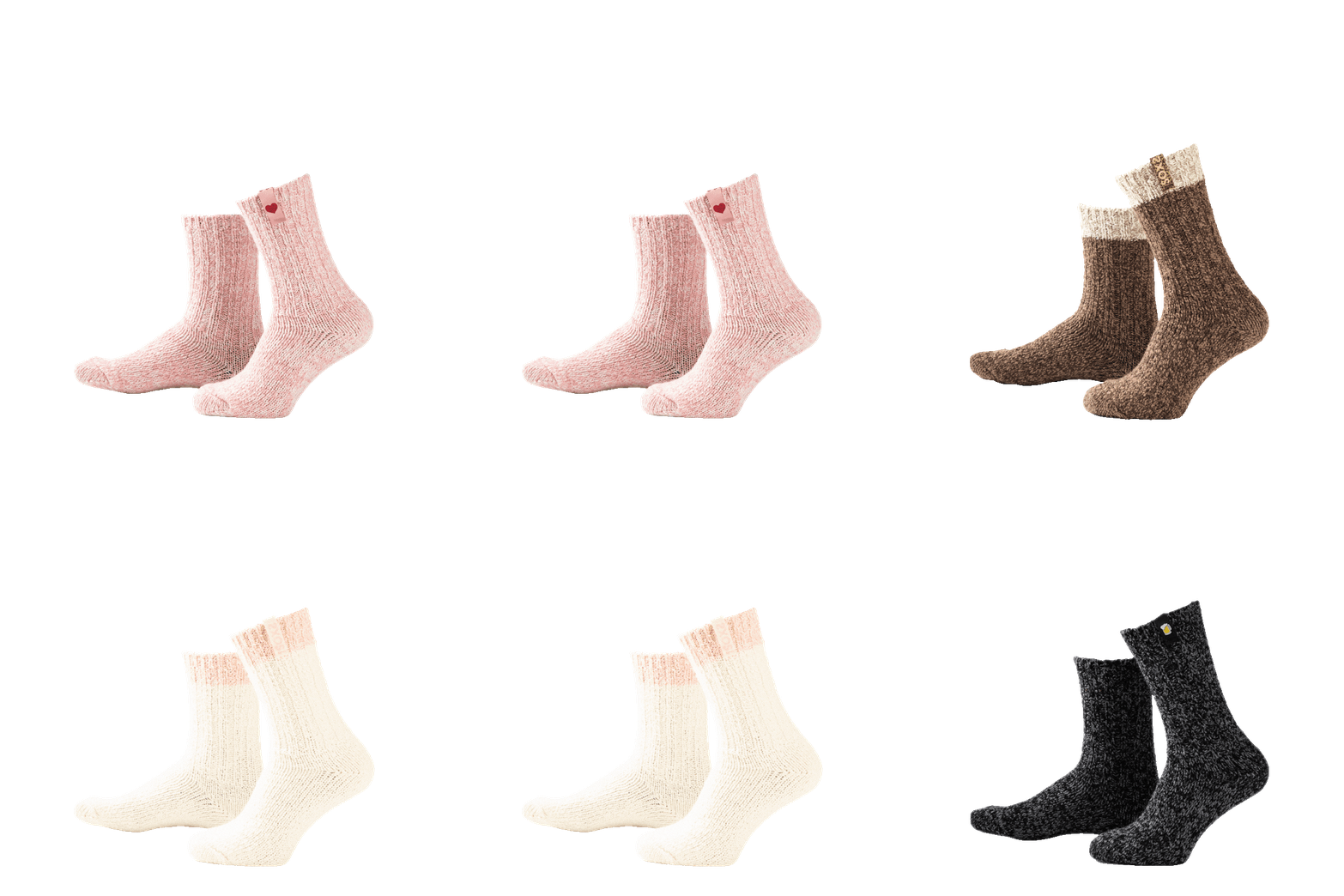

Soft warm premium wool socks
Gift ready, stylishly packaged
Orders placed before 1:00 PM will be shipped today (on weekdays) PLEASE NOTE: The delivery time of Pimp My Soxs is 5 working days!

Socks wear out most quickly under the heel because the heel is the highest-friction point on the foot. Every step you take grinds the heel of your sock against the inside of your shoe, creating repeated mechanical stress that gradually breaks down the fabric fibres. The sections below unpack exactly how this happens and what you can do about it.
The heel bears more concentrated friction than any other part of a sock because it is the first point of contact with the ground during each stride and the area that rubs most persistently against the inside of your shoe. Unlike the toe or the arch, the heel experiences a grinding, repetitive motion with every step, making it the zone where fabric stress accumulates fastest.
When you walk, your foot rolls from heel to toe in a continuous cycle. The heel strikes first, then the foot flattens, then the toes push off. During the heel-strike phase, the sock fabric is compressed between two hard surfaces: the sole of your foot and the interior of your shoe. This compression, combined with the sliding motion, creates friction that few fabrics can resist indefinitely.
Posture and gait also play a role. People who land heavily on their heels or who pronate (roll the foot inward) tend to generate even more concentrated pressure in specific spots, which accelerates wear in those precise areas. This is why heel wear on socks is rarely perfectly symmetrical and often reveals something about how you actually move.
Fabric thinning under the heel happens through a process called abrasion, where repeated friction gradually strips away individual fibres from the yarn. Over time, the interlocked loops that form the knitted structure become shorter, weaker, and more loosely connected until the fabric grows thin, then transparent, then develops a hole.
Knitted sock fabric is made up of interlocking loops of yarn. Each loop depends on its neighbours for structural support. When friction repeatedly attacks the same area, it does not just wear down the surface: it weakens the connections between loops. Once a few loops break or thin out, the surrounding loops lose support and begin to degrade faster. This is why heel wear often seems to accelerate once it starts, going from a slightly thin patch to a hole surprisingly quickly.
Heat and moisture speed this process up. Your foot generates warmth and perspiration inside a shoe, and warm, damp conditions soften fibres, making them more vulnerable to mechanical damage. A sock worn during an active day of walking or hiking faces a combination of heat, moisture, and high friction that tests even the most durable materials.
Yes, sock material has a significant influence on how quickly the heel wears through. Natural fibres like wool tend to be more resilient than many synthetic alternatives because wool fibres have a natural crimp and elasticity that helps them absorb friction and recover their shape. Thin, loosely spun synthetic fibres, by contrast, tend to pill and abrade more quickly under sustained pressure.
Wool socks have a particular advantage at the heel. Wool fibres are naturally coiled at a microscopic level, which gives them a spring-like quality. When compressed under heel pressure, they flex rather than snap, distributing stress more evenly across the fibre. This resilience means wool socks generally outlast thinner cotton or synthetic options at the heel, especially with regular use.
That said, the quality and construction of the sock matter as much as the raw material. A well-constructed wool sock with reinforced heel panels will outperform a cheaply made one every time. At SOXS, our socks are crafted from ethically obtained wool, chosen not only for its warmth and breathability but also for its natural durability. The fibre quality is built into the foundation of the sock from the start.
Sock fit has a direct impact on heel durability. A sock that is too large will bunch and fold under the heel, creating extra layers of fabric that rub against each other and against the shoe lining. A sock that is too small will stretch the fabric beyond its intended tension, thinning it out before friction even enters the equation. The right fit keeps the heel panel sitting smoothly in place, where it can do its job.
When a sock fits correctly, the reinforced heel section aligns with the actual heel of your foot. If the sock is even slightly too long or too short, that panel shifts out of position and the unprotected fabric ends up absorbing the friction instead. This misalignment is one of the most overlooked causes of premature heel wear.
Shoe fit matters too. A shoe with a rough interior lining or one that is slightly too large allows the foot to slide forward and back with each step, increasing the relative movement between sock and shoe. Pairing well-fitted socks with well-fitted shoes is the simplest structural solution to reducing heel wear over time.
You can slow down heel wear significantly by choosing high-quality socks in the right size, rotating them regularly so no single pair absorbs all the daily friction, washing them gently, and storing them properly. Small habits compound over time and can meaningfully extend the life of even your most-worn pairs.
Washing socks inside out reduces surface abrasion during the wash cycle, protecting the outer fibres. Washing on a gentle or wool cycle with cool water and a mild detergent preserves the structure of natural fibres. Avoid tumble-drying wool socks: air drying flat keeps the fibres from shrinking or distorting. Our sock care guide walks through exactly how to look after your socks season after season.
Rotating between at least three or four pairs means each individual sock gets time to recover its shape between wears. Natural fibres like wool are particularly good at bouncing back when given a rest. If you spot the early signs of thinning under the heel, darning (repairing the fabric by weaving new yarn across the thinning area) can extend the life of a beloved pair considerably. Our guide to darning socks covers this step by step and is well worth a read before you reach for the bin.
A worn heel becomes a sign to replace your socks when the fabric has thinned to the point of transparency, developed a hole, or begun to bunch and fold under your foot during wear. At that stage, the structural integrity of the sock is compromised and no amount of careful washing or rotation will restore it.
Before you reach that point, a thin but still-intact heel can often be darned and given a second life. Sustainability is at the heart of what we do at SOXS, and we always encourage repair before replacement. A well-darned sock is a small act of care for both the product and the planet.
When replacement is genuinely necessary, it is worth seeing it as an opportunity rather than a loss. Choosing a new pair made from durable, ethically obtained wool means investing in socks that will go the distance again. Browse our latest collection to find the right pair for your next chapter, whether that is a cosy evening at home, a long hike, or everything in between. And if you are looking for something for the whole family, our wool socks for children are made with the same care and quality as every other pair we make.