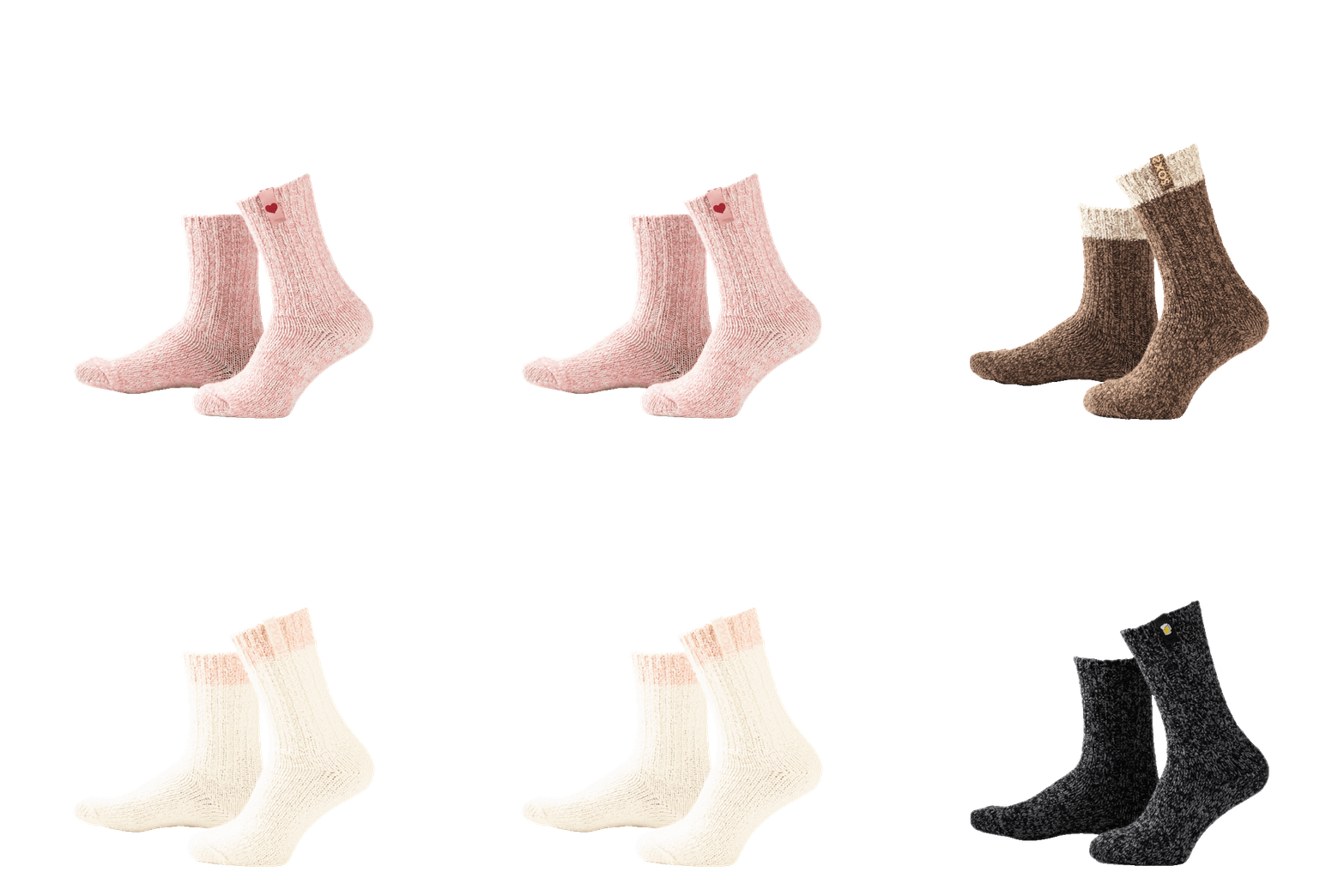
Soft warm premium wool socks
Gift ready, stylishly packaged
Orders placed before 1:00 PM will be shipped today (on weekdays) PLEASE NOTE: The delivery time of Pimp My Soxs is 5 working days!

Living with Parkinson’s disease brings unique challenges that affect every aspect of daily life, including something as simple as choosing the right socks. When movement becomes more difficult and comfort becomes paramount, the small details matter more than ever. Your feet, which carry you through each day, deserve special attention and care.
Wool socks offer remarkable benefits for people managing Parkinson’s symptoms. The natural properties of high-quality wool address many of the specific comfort and mobility challenges that come with this condition. From temperature regulation to enhanced stability, wool socks can make a meaningful difference in daily comfort and confidence.
Temperature sensitivity often becomes more pronounced with Parkinson’s disease, making it difficult to maintain comfortable body temperature throughout the day. Wool’s unique fibre structure naturally adapts to your body’s needs, providing intelligent temperature control that works around the clock.
Unlike synthetic materials that trap heat or cotton that loses warmth when damp, wool fibres create tiny air pockets that insulate when it’s cold and allow heat to escape when it’s warm. This means your feet stay at an optimal temperature whether you’re resting, moving about, or dealing with medication-related temperature fluctuations.
The breathable nature of quality wool socks prevents the overheating that can cause discomfort and restlessness, particularly important for those who spend extended periods sitting or have reduced mobility. This natural thermostat effect helps maintain the steady comfort that supports better sleep and daily well-being.
People with Parkinson’s often experience heightened skin sensitivity, making the texture of clothing and accessories more important than ever. Traditional wool might seem scratchy, but modern wool processing creates incredibly soft fibres that feel gentle against sensitive skin.
High-quality wool socks made from ethically sourced wool undergo special treatment to remove the coarse outer fibres that typically cause itching. The result is a smooth, soft surface that minimises friction and reduces the risk of skin irritation, blisters, or pressure sores that can develop from prolonged sitting or reduced sensation.
This softness becomes particularly valuable for people who have difficulty adjusting their position frequently or who experience the muscle rigidity common with Parkinson’s. The gentle contact with skin helps prevent the small irritations that can become major discomforts when mobility is limited.
Maintaining proper foot hygiene becomes more challenging when dexterity and mobility are affected by Parkinson’s disease. Wool’s natural moisture-wicking abilities provide an important first line of defence against common foot problems that can arise from reduced self-care capacity.
Wool fibres can absorb up to 30% of their weight in moisture while still feeling dry to the touch. This means perspiration is drawn away from your skin and gradually released into the air, creating a healthier environment for your feet throughout the day.
By keeping feet dry, wool socks help prevent the bacterial and fungal growth that can lead to infections, odours, and other complications. This is particularly beneficial for people who may have difficulty with regular foot washing or inspection, as the natural antimicrobial properties of wool provide ongoing protection.
The joint stiffness and discomfort associated with Parkinson’s disease can make every step feel challenging. Quality wool socks offer natural padding that helps absorb impact and reduce pressure on sensitive joints and pressure points in the feet.
The inherent springiness of wool fibres creates a cushioning effect that provides gentle support with each step. This can help reduce the jarring sensation that sometimes accompanies walking difficulties and provide a more comfortable experience when standing for extended periods.
This extra cushioning also benefits those who spend considerable time sitting, as it helps distribute pressure more evenly and reduces the risk of developing pressure sores or circulation problems in the feet and ankles.
Managing daily tasks becomes more complex with Parkinson’s disease, making low-maintenance clothing choices increasingly valuable. Wool’s natural properties significantly reduce the care requirements compared to other sock materials, simplifying your daily routine.
Wool’s natural odour resistance means socks can be worn multiple times between washes without developing unpleasant smells. This reduces the frequency of laundry tasks and the need for complex sock rotation systems that can be difficult to manage with reduced dexterity.
When washing is needed, quality wool socks can often be machine washed on gentle cycles, eliminating the need for hand washing or special treatments that might be difficult to manage. This independence in garment care helps maintain dignity and reduces reliance on others for basic clothing maintenance.
Balance and stability concerns are common with Parkinson’s disease, making fall prevention a priority in daily life. Wool’s natural texture provides better grip inside shoes compared to smooth synthetic materials, contributing to improved stability and confidence when walking.
The slightly textured surface of wool fibres creates better traction between your foot and shoe interior, reducing the sliding that can occur with slippery synthetic socks. This improved grip can make the difference between a confident step and an uncertain one.
Many wool socks designed for comfort also feature additional grip elements on the sole, making them suitable for wearing around the house without shoes. This dual functionality provides safety both inside and outside footwear, adapting to different mobility needs throughout the day.
Reduced sensation or prolonged periods of sitting can make pressure points particularly problematic for people with Parkinson’s disease. Well-constructed wool socks often feature minimal seaming or seamless construction that eliminates the ridges and bumps that can cause discomfort.
Traditional sock seams across the toe area can create pressure points that become increasingly uncomfortable throughout the day. Quality wool socks address this with smooth construction techniques that eliminate these potential problem areas entirely.
This seamless approach is particularly beneficial for people who have difficulty adjusting their socks throughout the day or who may not notice developing pressure points until they become painful. The smooth interior surface provides consistent comfort regardless of foot position or movement.
Shopping for replacements and managing clothing inventory can become challenging tasks with Parkinson’s disease. Wool’s natural durability means quality socks last significantly longer than cotton or synthetic alternatives, reducing the frequency of shopping trips and replacements.
High-quality wool fibres are naturally elastic and resilient, maintaining their shape and comfort properties through repeated wearing and washing. This long-lasting performance means fewer decisions about when to replace worn-out socks and less frequent shopping for new ones.
The durability also extends to the sock’s functional properties. The moisture-wicking, temperature regulation, and cushioning benefits remain effective throughout the sock’s extended lifespan, providing consistent comfort and support over time.
Circulation challenges can accompany Parkinson’s disease, particularly in the extremities. Wool socks support healthy blood flow through their unique combination of gentle compression, temperature regulation, and moisture management that creates optimal conditions for circulation.
Unlike tight synthetic socks that can restrict blood flow, quality wool socks provide gentle, even pressure that supports circulation without constriction. The natural elasticity of wool allows the sock to move with your foot and leg, maintaining consistent but not restrictive contact.
The temperature-regulating properties of wool help maintain the warmth that supports good circulation, while the moisture-wicking abilities prevent the dampness that can contribute to circulation problems. This combination creates an environment that supports healthy blood flow throughout the day.
Choosing wool socks when managing Parkinson’s disease involves looking for specific features that address your unique comfort and mobility needs. Focus on socks made from high-quality, ethically sourced wool that has been processed to eliminate itching and irritation.
Look for construction features like seamless toe areas, appropriate cushioning levels, and easy-care properties that fit your daily routine. Consider whether you need additional grip features for safety or specific compression levels for comfort and circulation support.
At SOXS, we understand that comfort isn’t a luxury but fundamental to daily well-being. Our wool socks are crafted with the specific needs of comfort seekers in mind, combining traditional New Zealand sheep’s wool with modern technology to create socks that truly don’t itch. With our 100% anti-itch guarantee, you can focus on enjoying the natural benefits of wool without worrying about irritation or discomfort.
The right pair of wool socks can make each day a little more comfortable and each step a little more confident. What small comfort changes might make the biggest difference in your daily routine?