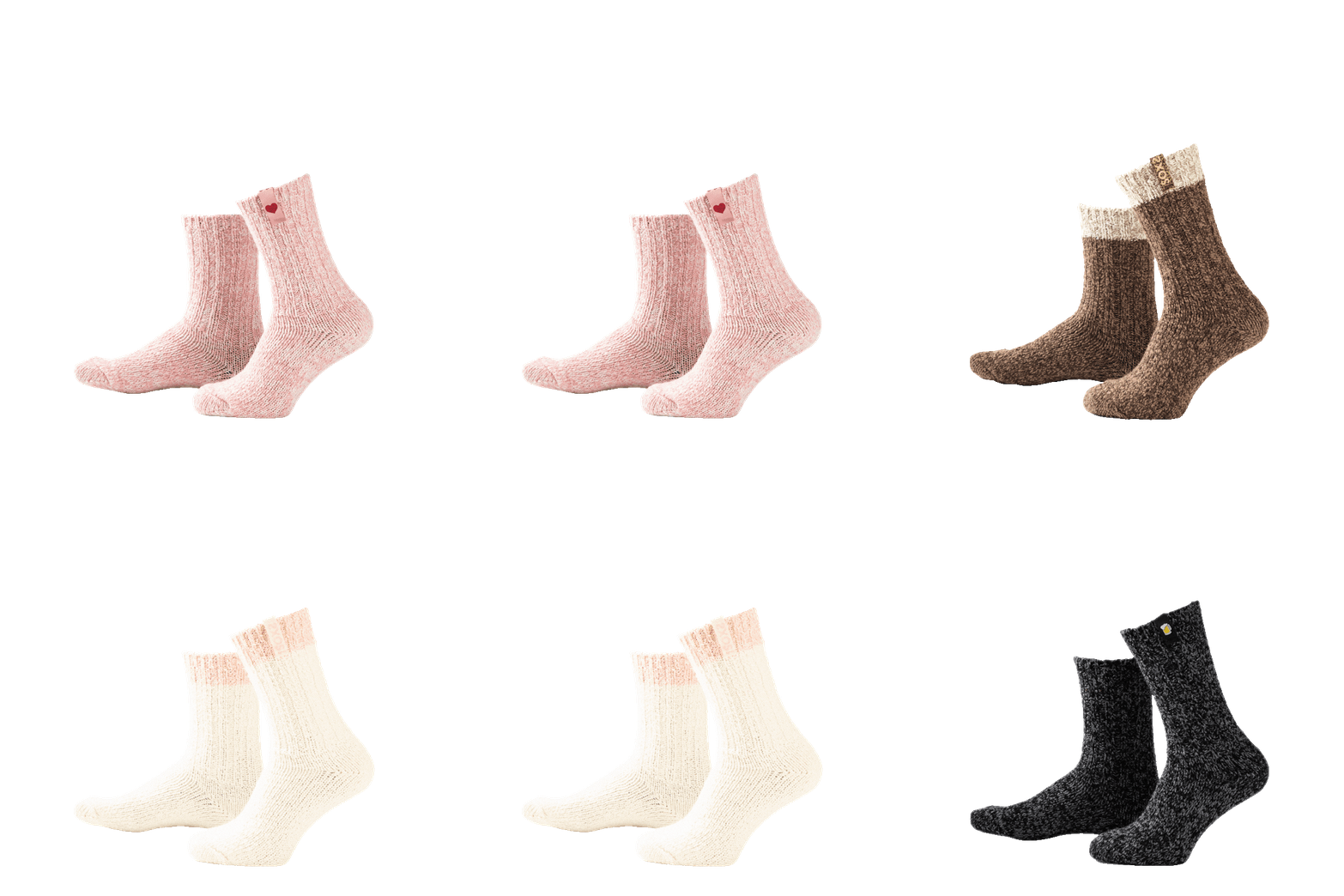
Soft warm premium wool socks
Gift ready, stylishly packaged
Orders placed before 1:00 PM will be shipped today (on weekdays) PLEASE NOTE: The delivery time of Pimp My Soxs is 5 working days!

When you notice your ankles looking puffy after a long day at work or feeling tight in your shoes, you’re experiencing ankle edema – a common condition where excess fluid accumulates in the tissues around your ankles. Whether it’s from sitting at a desk all day, standing for hours, or dealing with certain medical conditions, swollen ankles can make you feel uncomfortable and self-conscious.
The good news? The right socks can make a significant difference in managing ankle edema. From improving circulation to providing gentle support, the proper footwear foundation helps your body naturally reduce fluid retention and keeps your ankles feeling more comfortable throughout the day.
## 1. Understanding ankle edema and why socks matterAnkle edema occurs when fluid builds up in the soft tissues around your ankle joint, causing visible swelling and often discomfort. This happens for various reasons – prolonged sitting or standing, pregnancy, certain medications, heart conditions, or simply gravity doing its work throughout the day.
Your circulatory system works against gravity to pump blood and lymphatic fluid back up from your feet to your heart. When this process becomes less efficient, fluid pools in your lower extremities, particularly around the ankles where gravity has the strongest effect.
Quality socks designed for edema relief work by providing graduated compression and support that assists your body’s natural circulation. They create gentle pressure that helps push fluid back up your legs, reducing the pooling that causes swelling. The key lies in choosing socks with the right compression level, fit, and materials that work with your body rather than against it.
## 2. Compression socks improve blood circulationGraduated compression socks apply the strongest pressure at your ankle and gradually decrease the compression as they move up your leg. This design mimics the natural pumping action of your calf muscles, helping to push blood and lymphatic fluid back toward your heart.
The compression creates a pressure gradient that prevents blood from pooling in your lower legs and ankles. Medical-grade compression socks typically provide 15–20 mmHg of pressure for mild edema, while stronger compression levels are available for more severe cases under medical guidance.
When you wear properly fitted compression socks, you’re essentially giving your circulatory system extra support. The gentle squeeze helps your veins and lymphatic vessels work more efficiently, reducing the fluid buildup that causes ankle swelling. Many people notice a difference within hours of wearing them, with ankles feeling less tight and more comfortable.
## 3. Proper sock fit prevents constrictionIronically, socks that are too tight can actually worsen ankle edema by creating constriction points that impede circulation. When the top band of your sock cuts into your leg or ankle, it acts like a tourniquet, preventing proper blood flow and causing fluid to accumulate below the tight area.
Well-fitted socks for edema relief should feel snug without creating visible indentations on your skin. The elastic band should provide gentle support without digging in, and the sock should stay in place without sliding down or bunching up. This ensures consistent, comfortable compression throughout the day.
Look for socks with seamless construction around the ankle area and graduated compression that doesn’t create sudden pressure changes. The right fit allows for natural movement while maintaining the supportive pressure needed to combat fluid retention. Remember, if your socks leave deep marks on your legs, they’re too tight and could be counterproductive.
## 4. Moisture-wicking materials reduce inflammationExcess moisture around your ankles can contribute to inflammation and bacterial growth, potentially worsening edema symptoms. Moisture-wicking materials like merino wool naturally draw sweat away from your skin and allow it to evaporate, keeping your feet and ankles dry and comfortable.
Merino wool has unique properties that make it ideal for managing ankle edema. It can absorb up to 30% of its weight in moisture without feeling damp, and its natural antimicrobial properties help prevent bacterial growth that could lead to inflammation. The material also provides natural temperature regulation, preventing overheating that can worsen swelling.
Synthetic moisture-wicking fabrics can also be effective, particularly in athletic or compression socks designed for active use. The key is choosing materials that keep your skin dry and reduce the risk of irritation or infection that could complicate edema management. Dry, healthy skin around swollen ankles heals faster and feels more comfortable.
## 5. Cushioned soles provide ankle supportExtra cushioning in the sole and around the ankle area helps absorb impact and reduces stress on your ankle joints. This is particularly important if you spend long periods on your feet, as repeated impact can contribute to fluid retention and ankle swelling.
Cushioned sock construction provides a buffer between your foot and the ground, reducing the jarring motion that can impede circulation. The extra padding also offers gentle support around the ankle joint itself, helping to stabilize the area and reduce movement that might aggravate swelling.
Quality cushioned socks distribute pressure more evenly across your foot and ankle, preventing pressure points that could restrict circulation. This even distribution of weight and impact helps maintain better blood flow throughout the day, supporting your body’s natural ability to manage fluid levels in your lower extremities.
## 6. What sock height works best for edema relief?The ideal sock height for ankle edema depends on where your swelling occurs and how severe it is. Crew-height socks that extend several inches above the ankle provide compression and support to the most commonly affected area while remaining comfortable under most footwear.
For mild ankle edema, ankle-height compression socks may provide sufficient relief while offering maximum comfort and versatility. However, if your swelling extends up your calf or you experience more significant fluid retention, knee-high compression socks offer more comprehensive support.
Knee-high options provide graduated compression along the entire lower leg, which can be particularly effective for preventing fluid from accumulating in the ankle area. They’re especially beneficial if you sit or stand for long periods, as they support circulation throughout your lower leg. The key is finding the height that provides adequate coverage of your swelling area without being unnecessarily restrictive.
## 7. Seamless construction prevents pressure pointsTraditional sock seams, particularly around the toe area and ankle, can create pressure points that restrict circulation and contribute to fluid accumulation. Seamless or flat-seam construction eliminates these potential problem areas, ensuring smooth, even pressure distribution.
Pressure points from bulky seams can act like small dams, causing fluid to pool behind them and worsening localized swelling. Seamless socks provide consistent compression and support without creating areas where circulation might be compromised.
This smooth construction is particularly important for people with sensitive skin or existing ankle swelling, as any additional pressure or irritation can exacerbate the problem. The seamless design also tends to be more comfortable for extended wear, encouraging consistent use, which is important for managing edema effectively.
## 8. Wearing socks during sleep aids overnight recoveryMany people find that ankle edema is worse in the morning after fluid has had all night to accumulate in their lower extremities. Wearing light compression or support socks during sleep can help maintain circulation and prevent this overnight fluid buildup.
Sleep socks for edema should provide gentle compression – much lighter than daytime compression socks. They help maintain some circulation support while allowing your body to rest and recover. The key is choosing socks specifically designed for sleepwear that won’t be too tight or uncomfortable.
Overnight compression helps prevent the stagnation of fluid that often occurs when you’re lying flat for extended periods. By maintaining gentle pressure and support, sleep socks can help you wake up with less ankle swelling and start your day more comfortably. However, consult with a healthcare provider before using compression socks during sleep, especially if you have circulation issues.
## Simple steps to manage ankle edema effectivelyManaging ankle edema successfully involves combining the right socks with other supportive strategies. Leg elevation while wearing appropriate compression socks creates optimal conditions for reducing swelling – the socks provide consistent pressure while elevation uses gravity to help drain excess fluid.
The most effective approach includes wearing properly fitted compression or support socks throughout the day, elevating your legs above heart level for 15–20 minutes several times daily, and staying active to promote natural circulation. Regular movement, even simple ankle circles or calf raises, helps activate your muscle pump and prevents fluid stagnation.
Remember that consistency is important – wearing the right socks regularly provides better results than occasional use. Choose socks that you find comfortable enough to wear daily, and consider having multiple pairs so you can maintain your routine even while some are being washed.
SOXS provides comprehensive solutions for ankle edema through our scientifically designed sock collection that combines therapeutic benefits with everyday comfort. Our specialized approach addresses the core challenges of fluid retention and circulation support:
Experience the difference that properly designed socks can make in managing your ankle edema. Visit our shop today to discover our complete range of therapeutic socks, or explore our full collection at SOXS to find the perfect solution for your specific needs and lifestyle.
What small change in your daily sock routine could make the biggest difference in how your ankles feel at the end of the day?
For best results, wear compression socks throughout your entire day, putting them on first thing in the morning before swelling begins and removing them before bed. Most people benefit from 8-12 hours of daily wear, but start gradually with 2-4 hours if you’re new to compression therapy to allow your body to adjust.
While quality athletic socks with good support can provide some benefit, they lack the graduated compression that specifically targets edema. For mild swelling, look for socks with light compression (8-15 mmHg) rather than regular athletic socks, as the targeted pressure gradient is essential for effectively managing fluid retention.
Deep marks indicate your socks are too tight and could worsen circulation. Remove them immediately and consult a healthcare provider or sock fitting specialist to determine the correct size and compression level. Properly fitted compression socks should feel snug but comfortable, without leaving lasting indentations on your skin.
Seek medical evaluation if you experience sudden onset swelling, swelling in only one ankle, pain or warmth in the swollen area, or if the swelling doesn’t improve with elevation and appropriate socks within a few days. These could indicate underlying conditions requiring professional treatment beyond sock therapy.
Yes, compression socks are typically thicker than regular socks, so you may need to go up half a size in shoes to accommodate them comfortably. Tight shoes can counteract the benefits of compression socks by creating additional pressure points, so ensure your footwear has adequate room.
No, properly fitted compression socks should provide immediate comfort and gradual improvement in swelling. If your edema worsens after starting compression therapy, the socks may be too tight, incorrectly fitted, or you may need medical evaluation to rule out underlying conditions that require different treatment approaches.
Replace compression socks every 3-6 months with regular daily use, as the elastic fibers lose their effectiveness over time. Signs it’s time for new socks include visible stretching, loss of compression feel, or if they no longer stay in place properly. Having 2-3 pairs allows for regular washing while maintaining consistent therapy.