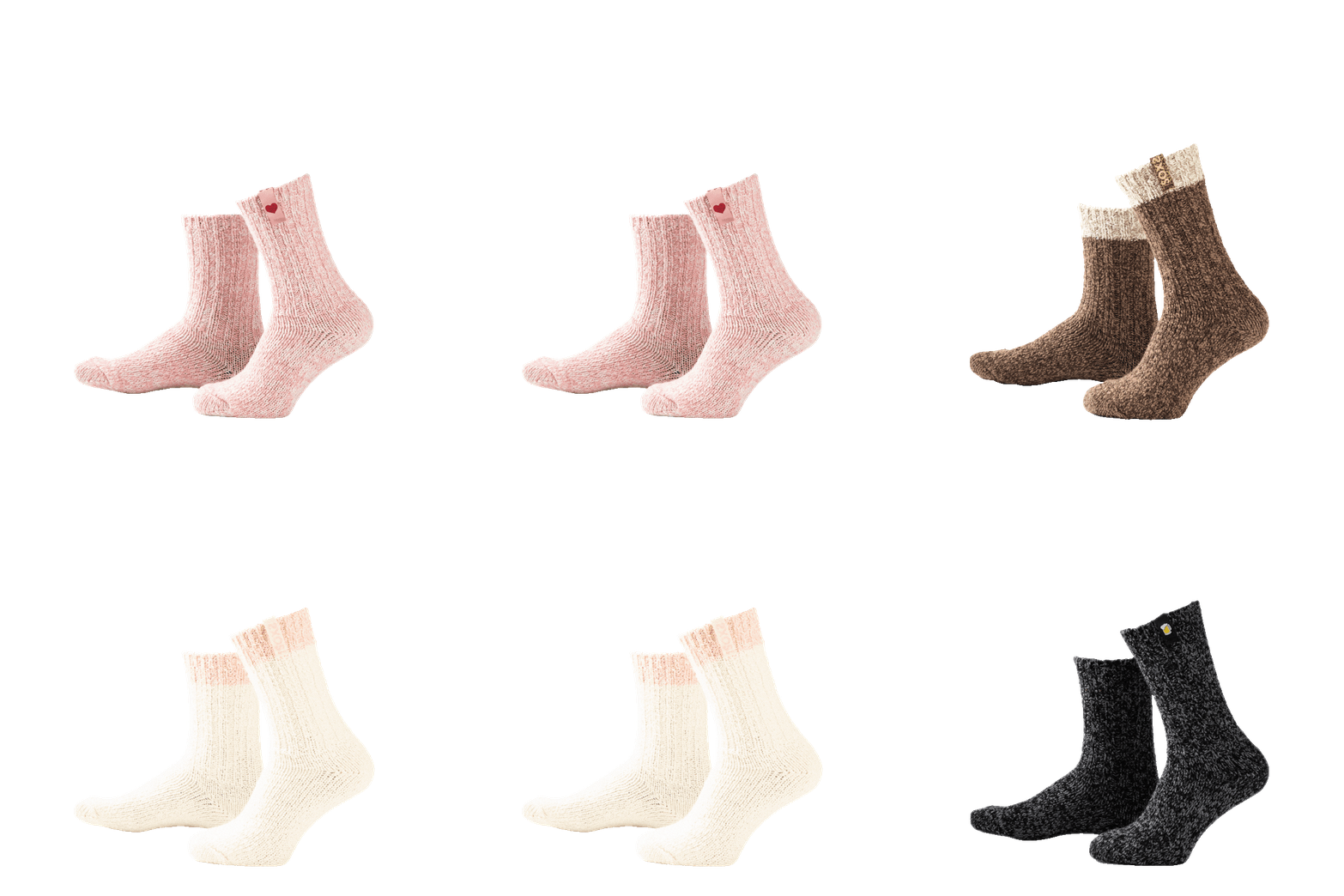
Soft warm premium wool socks
Gift ready, stylishly packaged
Orders placed before 1:00 PM will be shipped today (on weekdays) PLEASE NOTE: The delivery time of Pimp My Soxs is 5 working days!

The best socks for running in cold weather are warm, moisture-wicking, and well-fitted enough to prevent blisters even during longer runs. Wool running socks stand out as a top choice because natural wool fibres regulate temperature, manage sweat, and stay comfortable across a wide range of winter conditions. Below, we answer the most common questions about cold weather running socks so you can make the right choice before you head out the door.
A sock suitable for cold-weather running must balance warmth, breathability, and moisture management all at once. It needs to keep your feet warm enough to stay comfortable in low temperatures, while still drawing sweat away from the skin to prevent the chilling effect that wet feet bring on a winter run. Fit and cushioning also matter enormously for performance and blister prevention.
When you are choosing socks for running in cold weather, look for these key qualities:
Natural wool fibres tick every one of these boxes, which is why so many cold-weather runners gravitate toward wool running socks as their go-to winter option.
Yes, wool socks are genuinely excellent for running in winter. Wool is a natural temperature regulator, meaning it keeps your feet warm when it is cold and releases excess heat when your effort level rises. It also absorbs a meaningful amount of moisture while still feeling dry against the skin, which is a rare combination that synthetic fibres often struggle to replicate.
What makes wool particularly well suited to winter running is its resilience. Unlike cotton, which becomes cold and heavy when wet, wool maintains much of its insulating ability even when damp from sweat or light rain. This is especially valuable on longer runs where conditions and your body temperature change throughout the effort.
At SOXS, we craft our warm running socks from ethically obtained wool sourced from New Zealand sheep. The natural crimp of this wool creates tiny air pockets within the fibre structure that act as insulation, keeping warmth close to your foot without adding bulk. Our sport wool socks are designed with exactly this kind of active use in mind, combining the performance benefits of natural wool with a fit that works during movement.
A medium-weight sock is the best starting point for most cold-weather running. It provides enough cushioning and insulation for temperatures between roughly 0°C and 10°C without making your shoe fit uncomfortably snug. In very cold or wet conditions, a heavier weight may be appropriate, but only if your running shoes have enough room to accommodate the extra volume without pinching.
Thickness in a running sock is not just about warmth. It also affects how the sock interacts with your shoe. A sock that is too thick for your shoe will compress your foot, restrict blood flow, and create pressure points that lead to blisters. If you are buying warm running socks specifically for winter use, it is worth trying them on with your running shoes before committing to a long run.
Here is a rough guide to sock weight and temperature:
Preventing blisters when running in thicker winter socks comes down to fit, fibre choice, and shoe compatibility. The most common cause of blisters in cold-weather running is friction created by a sock that moves within the shoe, either because it is slightly too large or because the shoe has become roomier than expected with the thicker sock inside.
Always size your running socks precisely. A sock that is even slightly too long will fold or bunch at the toe box, and that extra material rubs against the skin with every stride. Wool socks from SOXS are sized to fit snugly without squeezing, which helps keep the sock in place throughout the run.
Before any long run in new winter socks, put them on with your running shoes and walk around for a few minutes. Your heel should sit firmly in place, your toes should have a small amount of room to move, and the sock should feel smooth against your skin with no wrinkles or pressure points. If the shoe feels tight across the forefoot, the sock may be too thick for that particular shoe.
Wool fibres also naturally reduce friction compared to synthetic materials, which gives them an additional advantage for blister prevention. The smooth, slightly elastic surface of quality wool sits comfortably against the skin rather than gripping and pulling with each movement.
Layering socks for running is generally not recommended, even in very cold temperatures. Running with two pairs of socks creates additional bulk inside the shoe, which compresses the foot, restricts natural movement, and dramatically increases the risk of blisters. A single well-chosen heavyweight wool sock will almost always outperform two layered socks in both comfort and warmth.
The exception is when a runner has a specific fit issue, such as a shoe that runs slightly large, where a thin liner sock beneath a wool running sock can improve the overall fit. In that case, both socks should be thin enough together to sit comfortably inside the shoe without compression. However, this is a fit solution rather than a warmth strategy.
For genuinely extreme cold, the better approach is to focus on the rest of your cold weather running gear. Waterproof or wind-resistant shoe covers worn over your running shoes will protect your feet from the elements far more effectively than adding a second sock, and they allow your single quality wool sock to do its job properly.
Caring for wool running socks properly is straightforward and extends their lifespan significantly. The key steps are washing at low temperatures, avoiding the tumble dryer, and reshaping the socks while they are still damp. Treated well, a quality pair of wool running socks will hold their shape, elasticity, and insulating properties for many seasons.
Follow these care steps to keep your socks performing at their best:
At SOXS, sustainability is central to everything we make. We design our socks to last, and proper care is the most direct way to extend that lifespan and reduce the environmental footprint of your wardrobe. If you are ready to invest in a pair built for winter running, explore our full collection of wool socks and find the right weight and style for the conditions you run in.