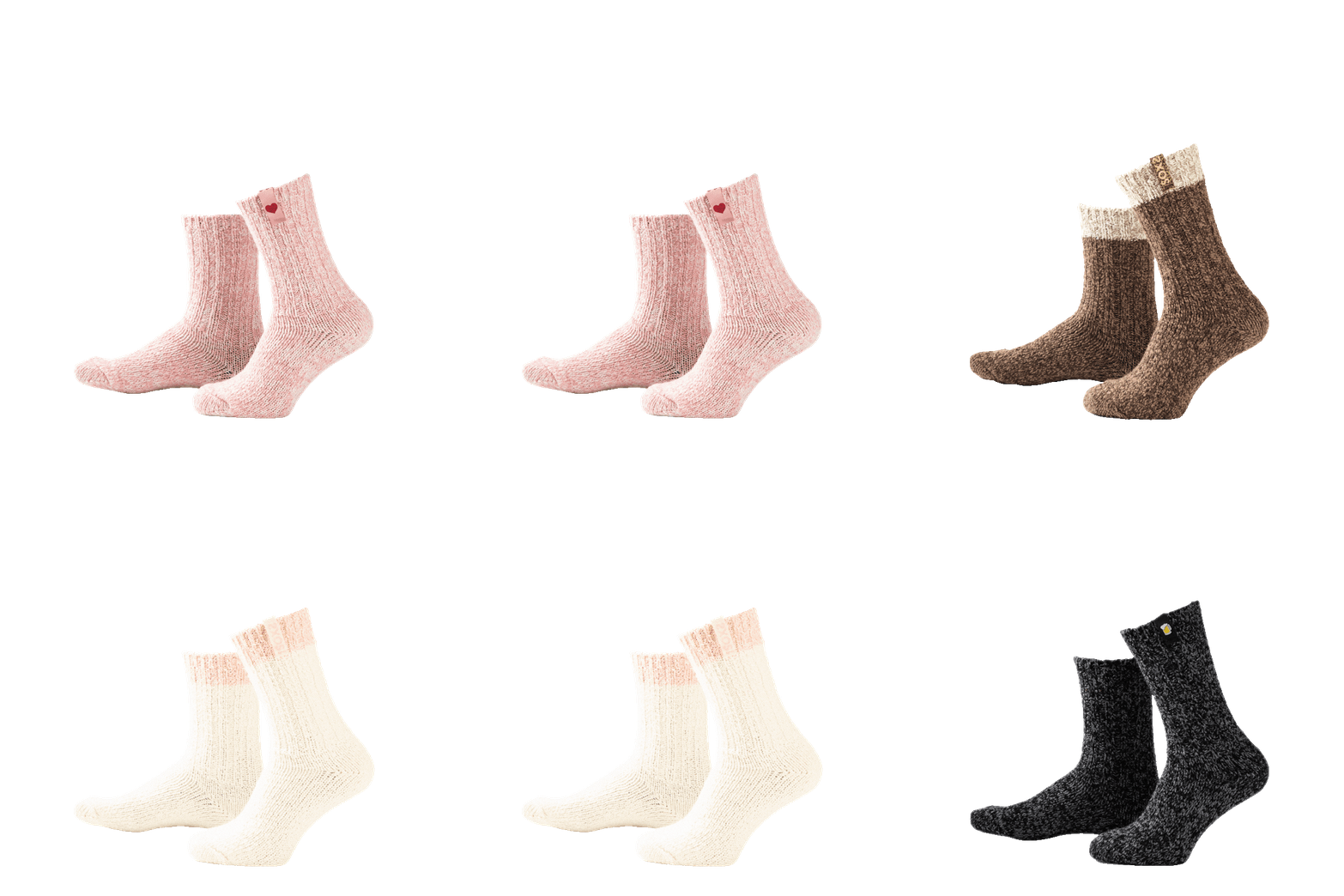
Soft warm premium wool socks
Gift ready, stylishly packaged
Orders placed before 1:00 PM will be shipped today (on weekdays) PLEASE NOTE: The delivery time of Pimp My Soxs is 5 working days!

The best socks for winter walking are made from wool, ideally a thick, cushioned style that sits above the ankle. Wool naturally regulates temperature, wicks moisture away from the skin, and stays warm even in wet conditions, making it the standout choice for cold-weather walks. Below, we answer the most common questions about winter walking socks so you can find the perfect pair with confidence.
A great winter walking sock keeps your feet warm, dry, and comfortable across varied terrain and temperatures. The best socks for winter walking combine an insulating, moisture-managing material with enough cushioning to protect your feet on longer routes, all while fitting snugly inside your boot without bunching or slipping.
Beyond material, a few key qualities separate a genuinely good winter walking sock from an ordinary one:
When all of these qualities come together in a single sock, the difference on a cold morning walk is immediately noticeable. Warm feet are happy feet, and the right sock is the foundation of that.
Wool is the best material for winter walking socks because it insulates even when damp, breathes naturally, and regulates temperature across a wide range of conditions. Unlike synthetic alternatives, wool fibres trap warm air close to the skin while simultaneously drawing moisture outward, so your feet stay warm without overheating on more active stretches of a walk.
Wool also has natural odour-resistant properties, which is a genuine advantage when you are out for several hours. Synthetic materials tend to hold onto odour over time, whereas wool fibres resist bacterial growth, keeping socks fresher for longer between washes.
At SOXS, we work with sustainably sourced New Zealand sheep’s wool, ethically obtained from sheep raised with care and respect. This wool is naturally soft against the skin, making it comfortable even for those who find wool scratchy in other forms. The quality of the raw material makes a real difference to how the finished sock performs and feels on your foot.
Wool also biodegrades at the end of its life, unlike petroleum-based synthetic fibres. If sustainability matters to you alongside performance, wool is the clear choice for warm wool walking socks that you can feel good about wearing.
For winter walking, a medium- to heavy-weight sock is generally the right choice. A thicker sock provides more insulation and cushioning, which matters on cold days and longer routes. However, the ideal thickness also depends on your boot fit. A very thick sock in a snug boot can restrict circulation and actually make your feet colder, so always check that your boot accommodates the extra volume comfortably.
Here is a simple guide to sock weight and when each suits winter walking:
If you are unsure, a medium-weight wool sock is a reliable starting point for most winter walkers. It offers enough warmth for genuinely cold days without creating a fit issue in most standard walking boots.
Winter walking socks should ideally reach at least to mid-calf. A longer sock protects the ankle and lower leg from cold air, prevents the top of the boot from rubbing directly against bare skin, and stays securely in place during movement. Ankle-length or short socks leave a gap between your sock and boot shaft, which is a fast route to cold, chafed skin on a winter walk.
Crew-length socks, which sit a few centimetres above the ankle, are a solid minimum for walking. Knee-high or over-the-calf styles offer even more coverage and are particularly useful in very cold weather or when wearing lower-cut boots.
The longer length also gives the sock more surface area to grip the leg, which reduces slipping inside the boot. Few things are more distracting on a walk than a sock that keeps sliding down, and a well-fitted, longer sock solves that problem entirely. Browse our sport and walking socks to find styles in the lengths best suited to outdoor use.
Wool walking socks last longest when washed gently at low temperatures and air-dried rather than tumble-dried. High heat is the primary cause of wool shrinkage and fibre damage, so keeping wash temperatures at 30 degrees Celsius or below and skipping the dryer are the two most important habits to build. With the right care, a quality pair of wool socks can remain in excellent condition for years.
A few straightforward practices will protect your socks and keep them performing well through many winters:
At SOXS, we believe that caring for your products is part of living more sustainably. A sock that lasts five years instead of one means less waste and more value from every purchase. Our fine wool collection is crafted to reward exactly this kind of care, staying soft, warm, and comfortable season after season when looked after properly.
Investing in a quality pair of hiking socks for winter and then treating them well is genuinely one of the simplest ways to make your outdoor wardrobe more sustainable. Good wool, handled with care, is one of nature’s most resilient materials. Explore our full range of eco-friendly wool socks and find the pair that will carry you through every cold-weather walk in comfort and style.