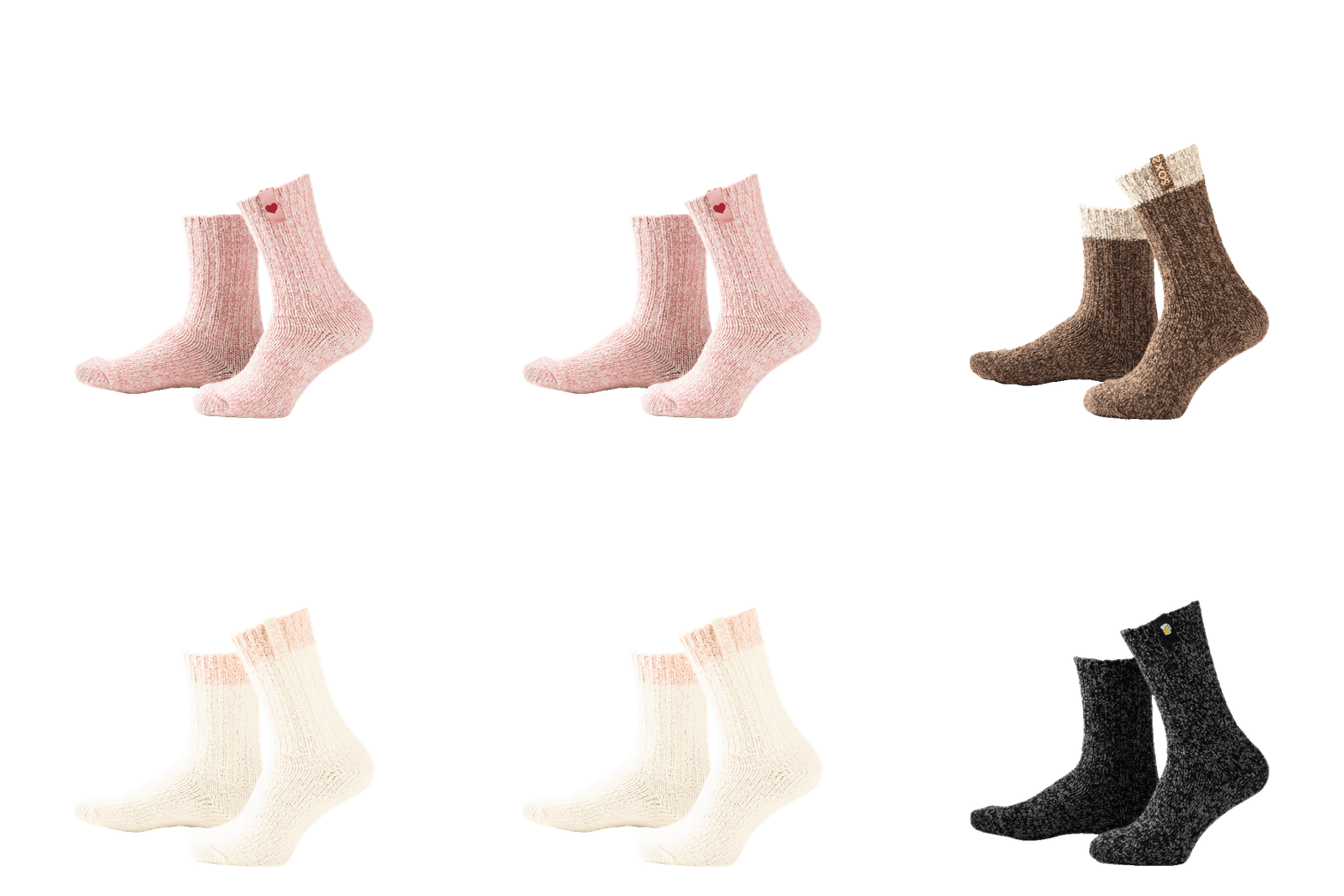
Soft warm premium wool socks
Gift ready, stylishly packaged
Orders placed before 1:00 PM will be shipped today (on weekdays) PLEASE NOTE: The delivery time of Pimp My Soxs is 5 working days!

When you slip on a pair of wool socks, you’re experiencing one of nature’s most remarkable moisture-management systems. Wool’s unique ability to absorb moisture while keeping you comfortable has made it the go-to choice for everything from hiking adventures to cozy evenings at home. Understanding why wool performs so exceptionally well at managing moisture can help you make better choices for your feet and overall comfort.
The secret lies in wool’s complex fiber structure and natural properties that have evolved over thousands of years. Unlike synthetic materials or even cotton, wool offers a sophisticated moisture-management system that works both when you’re active and when you’re at rest.
Wool absorbs moisture exceptionally well because of its unique protein-based fiber structure, which can hold up to 30% of its weight in water without feeling wet. The crimped, scaly surface of wool fibers creates countless tiny air pockets that trap moisture vapor while allowing air circulation, making it one of nature’s most effective moisture-wicking materials.
The magic happens at the molecular level. Wool fibers contain keratin, the same protein found in human hair and nails. This protein structure includes hydrophilic (water-loving) sites that actively attract and bind moisture molecules from your skin. When you perspire, these binding sites pull moisture away from your feet and into the fiber core.
What makes this process even more impressive is wool’s dual-zone moisture management. The outer layer of each fiber repels liquid water, preventing that soggy feeling you get with cotton socks. Meanwhile, the inner core absorbs water vapor, creating a dry microclimate next to your skin. This means you stay comfortable even during intense physical activity or in warm conditions.
The crimped structure of wool fibers also plays an important role. These natural spirals create a three-dimensional network that increases surface area and enhances air circulation. This allows moisture to evaporate gradually while maintaining insulation properties—something synthetic materials struggle to achieve.
Wool significantly outperforms both cotton and synthetic fabrics in moisture management, absorbing up to 30% of its weight in moisture compared to cotton’s roughly 7% and most synthetics’ less than 1%. While cotton becomes heavy and stays wet, and many synthetics shed moisture rather than absorb it, wool actively wicks moisture away while maintaining its insulating properties and comfort.
Cotton’s main weakness lies in how it absorbs moisture. When cotton fibers take on water, they swell and become saturated, creating that uncomfortable, clingy feeling. Cotton also loses its insulating ability when wet and takes a long time to dry. This is why cotton socks can leave your feet feeling cold and clammy after exercise or in humid conditions.
Synthetic materials like polyester take the opposite approach. They’re designed to move moisture rather than absorb it. While this means they can dry quickly, it also means moisture may have nowhere to go except to pool on your skin or evaporate directly from the surface. This can create hot spots and an uncomfortable, sweaty feeling during activity.
Wool strikes the perfect balance. It absorbs moisture vapor efficiently, transports it away from your skin, and releases it gradually to the environment. This process happens continuously, creating a self-regulating system that adapts to your activity level and environmental conditions. You get the comfort of dry feet without the stuffiness of synthetic materials or the sogginess of cotton.
Wool maintains its warmth when wet because its crimped fiber structure traps insulating air pockets even when moisture is present, and the absorption process can generate heat through a chemical reaction called the heat of sorption. This unique property allows wool to retain up to 80% of its dry insulation value even when damp.
The heat of sorption is particularly fascinating. When wool fibers absorb moisture, water molecules bond with the protein structure, releasing small amounts of energy as heat. This means wool can literally warm up as it absorbs moisture from your skin, creating a cozy microclimate around your feet.
The three-dimensional structure of wool fibers also contributes to this warming effect. Even when individual fibers contain moisture, the spaces between fibers remain filled with air, which is an excellent insulator. This is completely different from cotton, where wet fibers collapse and eliminate insulating air spaces, or synthetics, where moisture sits on the surface and conducts heat away from your body.
This property makes wool ideal for variable conditions where you might encounter moisture from sweat, light rain, or snow. Whether you’re hiking in changing weather or simply dealing with the natural moisture your feet produce throughout the day, wool continues to provide comfort and temperature regulation that other materials cannot match.
Merino wool offers some of the best moisture management among wool types, with finer fibers that provide superior comfort and enhanced wicking properties compared to traditional wool. The finer the wool fiber, the more surface area it has for moisture absorption, while coarser wools tend to prioritize durability and maximum warmth in extreme conditions.
Merino wool stands out because its ultra-fine fibers create more absorption sites per square inch. These fibers are also naturally softer and less likely to cause irritation, making them ideal for direct skin contact. The increased surface area means better moisture transport and faster adaptation to changing conditions throughout your day.
Traditional wool varieties, while coarser, excel in different situations. They provide maximum warmth and durability, making them well suited to extreme cold, where moisture management must be balanced with serious insulation. These wools work well in thick socks designed for winter sports or outdoor work in harsh conditions.
The processing and blend of wool also affect moisture performance. High-quality wool products often include small amounts of synthetic fibers that enhance durability without compromising wool’s natural moisture-wicking properties. This creates socks that maintain wool’s comfort benefits while lasting longer through repeated wear and washing.
At SOXS, we use premium merino wool in our collections precisely because of these superior moisture-management properties. Our wool comes from ethically sourced New Zealand sheep, ensuring you get the comfort and performance that make wool the ultimate choice for happy, healthy feet in any season.