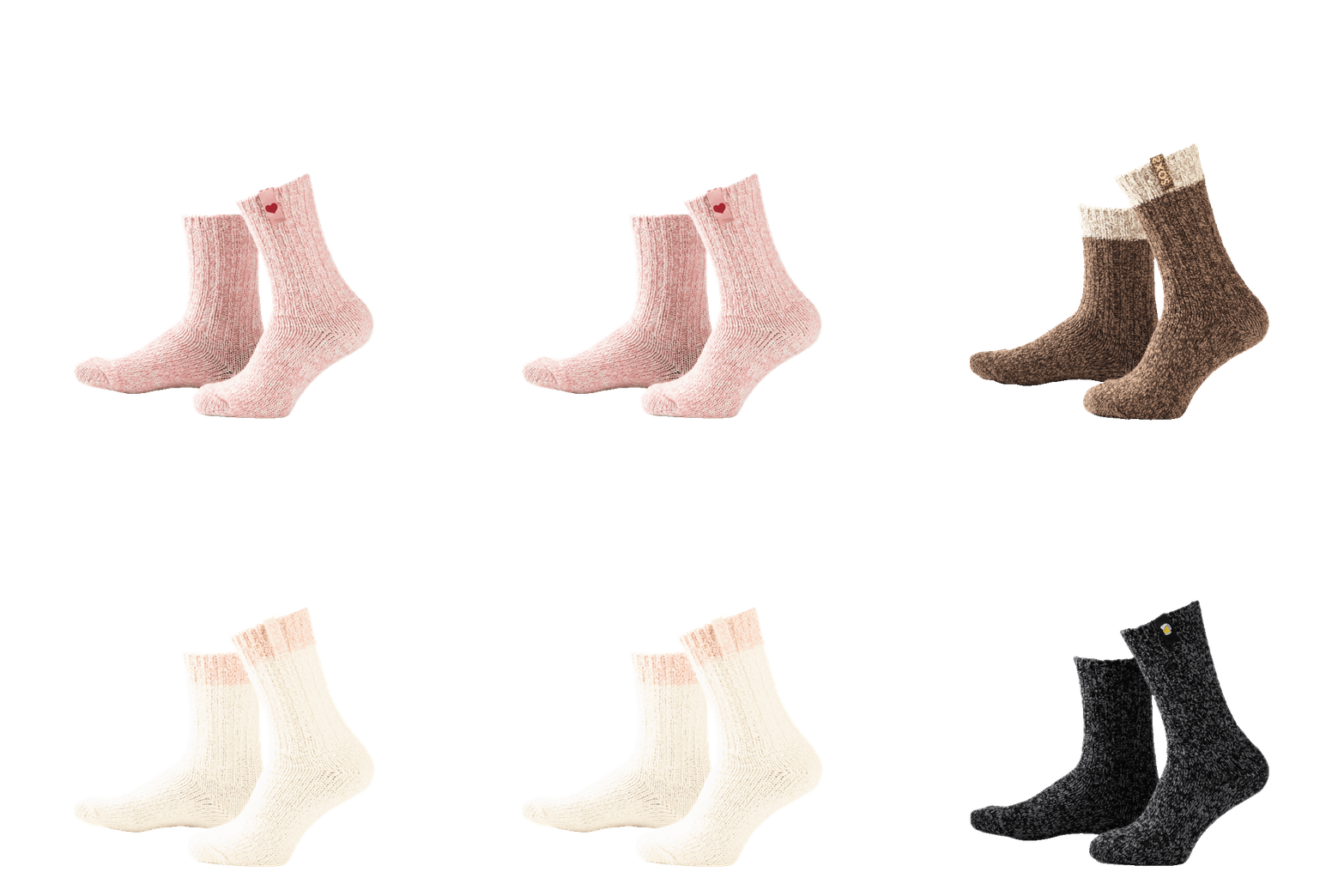
Soft warm premium wool socks
Gift ready, stylishly packaged
Orders placed before 1:00 PM will be shipped today (on weekdays) PLEASE NOTE: The delivery time of Pimp My Soxs is 5 working days!

Varicose veins affect millions of people worldwide, causing both cosmetic concerns and physical discomfort. These enlarged, twisted veins typically appear on the legs and can lead to aching, swelling, and feelings of heaviness. While genetics and lifestyle factors play major roles in their development, many people wonder whether something as simple as their choice of socks could make a difference.
The relationship between hosiery and leg health is more complex than you might think. From compression technology to fabric choices, what you wear on your feet and legs can influence circulation and comfort throughout the day.
Varicose veins are enlarged, twisted veins that occur when blood pools in the legs due to weakened or damaged vein valves. These one-way valves normally prevent blood from flowing backward, but when they fail, blood accumulates, causing veins to swell and become visible under the skin.
Several factors contribute to the development of varicose veins. Age plays a significant role, as vein walls and valves naturally weaken over time. Genetics strongly influence your risk, with family history being one of the strongest predictors. Pregnancy increases pressure on leg veins due to increased blood volume and hormonal changes that relax vein walls.
Prolonged standing or sitting—especially in jobs that require long periods in one position—can impair circulation and increase the risk of varicose veins. Obesity adds extra pressure on leg veins, while a lack of physical activity reduces the muscle-pump action that helps blood return to the heart. Women are more susceptible than men, partly due to hormonal fluctuations during menstruation, pregnancy, and menopause.
Regular socks alone cannot prevent varicose veins, but compression socks can help reduce the risk by improving blood circulation and supporting vein function. The key lies in graduated compression, which applies gentle pressure to encourage blood flow back toward the heart.
Compression socks work by applying the greatest pressure at the ankle and gradually decreasing pressure up the leg. This gradient helps counteract gravity and supports the natural muscle-pump mechanism that moves blood upward. For people with risk factors such as prolonged standing, a family history, or pregnancy, compression socks can be a valuable preventive tool.
However, prevention requires a comprehensive approach. While compression socks provide mechanical support, they work best when combined with regular exercise, maintaining a healthy weight, avoiding prolonged sitting or standing, and elevating the legs when resting. Think of compression socks as one important component of a broader leg-health strategy rather than a standalone solution.
Compression socks improve blood circulation by applying graduated pressure that mimics and enhances the natural muscle-pump action in your legs. The external pressure helps push blood upward against gravity, reducing the workload on your veins and preventing blood from pooling in the lower extremities.
The compression mechanism works through several pathways. First, external pressure reduces the diameter of leg veins, which increases blood velocity and helps vein valves close more effectively. This prevents the backward flow that leads to blood pooling. Second, compression enhances the muscle-pump effect during walking or movement, making each muscle contraction more efficient at moving blood upward.
Different compression levels serve different purposes. Light compression of 8–15 mmHg provides comfort for healthy individuals who stand or sit for long periods. Moderate compression of 15–20 mmHg offers therapeutic benefits for mild swelling and varicose vein prevention. Higher compression levels require medical supervision and are typically prescribed for specific venous conditions.
Compression socks are medical devices designed with graduated pressure zones to improve circulation, while regular wool socks focus primarily on comfort, warmth, and moisture management, without therapeutic compression features.
The construction differs significantly between the two. Compression socks use specialized elastic fibers woven in precise patterns to create graduated pressure from ankle to calf. They’re manufactured to exact specifications, with consistent compression levels measured in millimeters of mercury (mmHg). Regular wool socks, even high-quality ones, are designed for comfort and temperature regulation but don’t provide the structured pressure needed for circulation benefits.
Material composition also varies. Compression socks typically blend synthetic materials such as nylon, spandex, and elastane to achieve the necessary stretch and recovery properties. Wool socks prioritize natural fibers for breathability, moisture-wicking, and temperature control. While wool socks excel at keeping feet comfortable and dry, they lack the engineered compression technology needed to influence blood flow.
Both serve important but different purposes. Compression socks address specific medical or preventive needs related to circulation, while quality wool socks provide daily comfort and foot health through superior moisture management and temperature regulation.
Socks that support healthy blood flow feature non-restrictive fits, moisture-wicking materials, proper cushioning, and seamless construction. The most important feature is avoiding tight bands or elastic that constrict circulation around the calf or ankle.
Fit plays a crucial role in circulation support. Socks should be snug but never tight, with elastic that holds the sock in place without creating indentations on your skin. Look for graduated-fit designs, where the sock is slightly looser at the top and more fitted at the foot. This prevents the tourniquet effect that can impede blood flow.
Material selection matters for circulation health. Moisture-wicking fabrics keep feet dry, preventing swelling that can compress blood vessels. Natural fibers such as merino wool excel at temperature regulation, which helps maintain optimal blood flow. Synthetic blends can provide stretch and recovery while maintaining shape.
Construction details that support circulation include flat seams that don’t create pressure points, cushioning in key areas without bulk, and reinforcement that doesn’t add restrictive thickness. The sock should move with your foot naturally without bunching or sliding, which can create pressure points that impede circulation.
For daily wear, choose socks with these circulation-friendly features rather than relying on regular socks for therapeutic benefits. When circulation support is a medical concern, consult healthcare providers about appropriate compression levels and specific recommendations for your situation.
Understanding the relationship between socks and leg health empowers you to make informed choices for your daily comfort and long-term well-being. While the right socks can support healthy circulation, remember that varicose vein prevention involves multiple lifestyle factors working together. At SOXS, we believe that starting with comfortable, well-designed socks that don’t restrict circulation is a simple but important step in caring for your legs throughout the day.